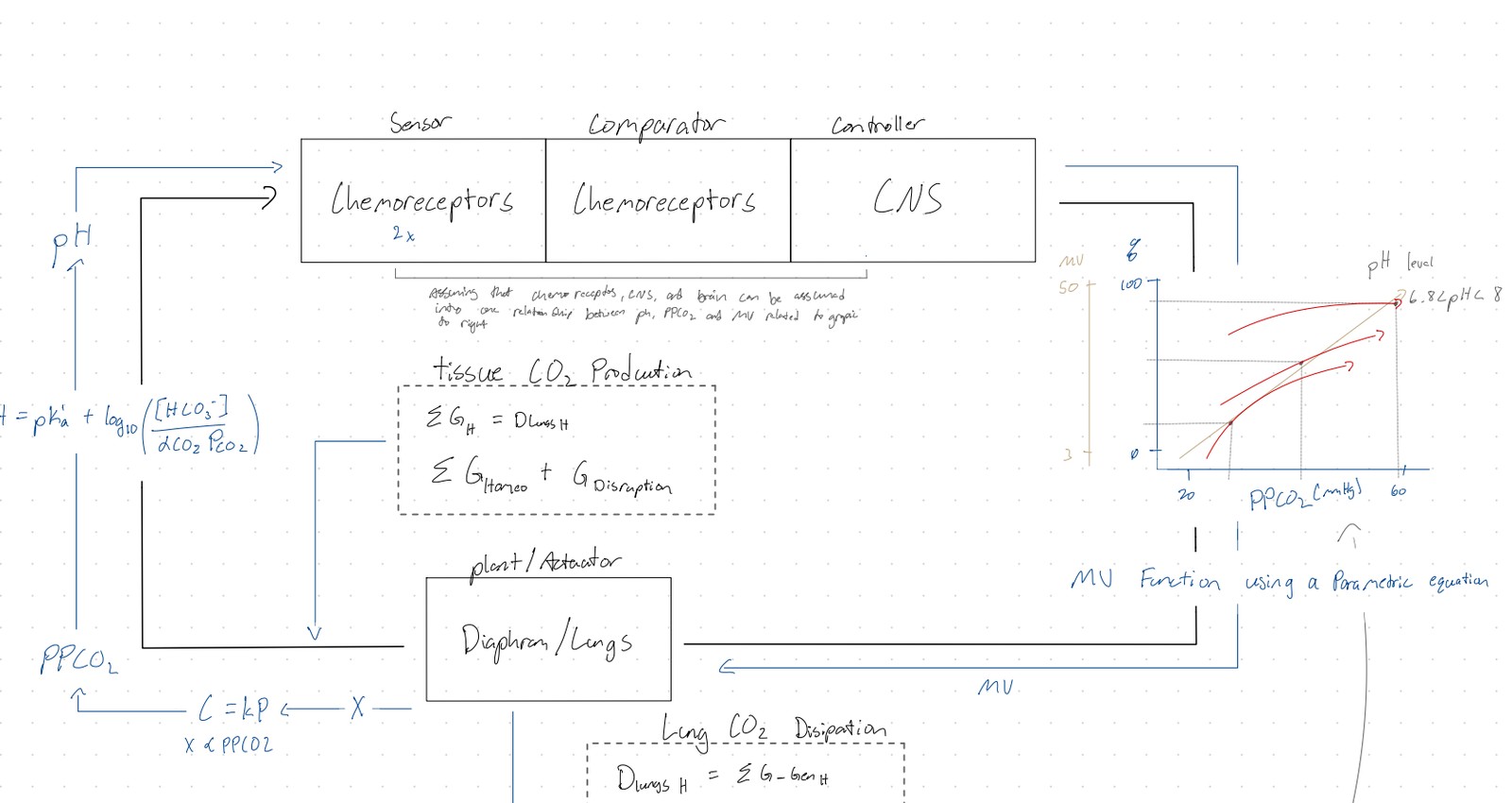
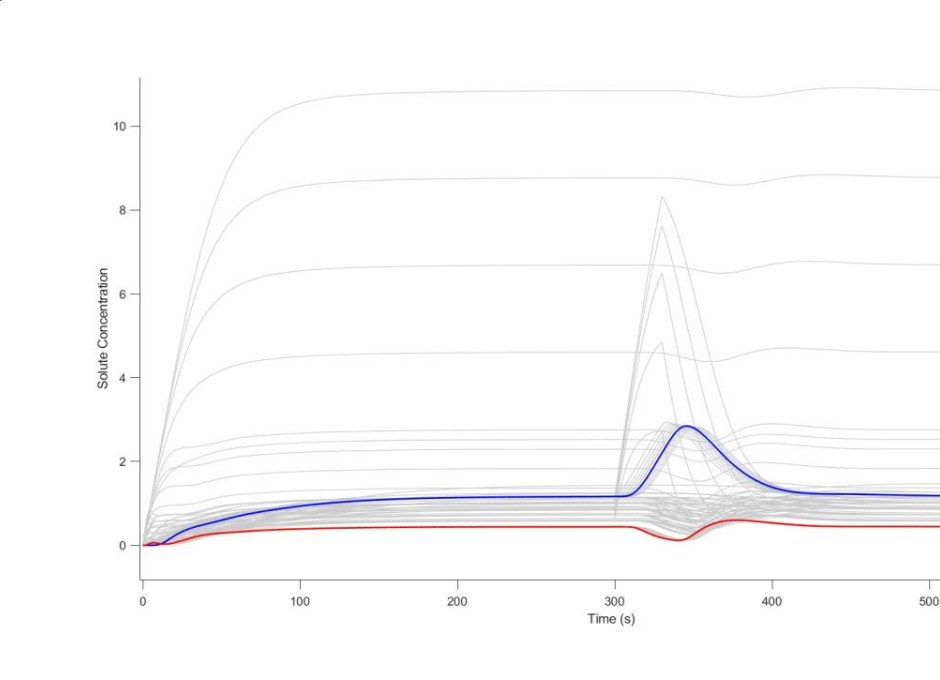
The base model divides the body into thirteen compartments — lungs, brain, heart, liver and GI, kidneys, muscle, skin, bone, fat, thyroid, sex glands, adrenals, and a catch-all — each with its own volume, resistance, compliance, and inertance, plus arteries and veins. A four-chamber heart with time-varying elastance and pressure-driven valves supplies the flow.
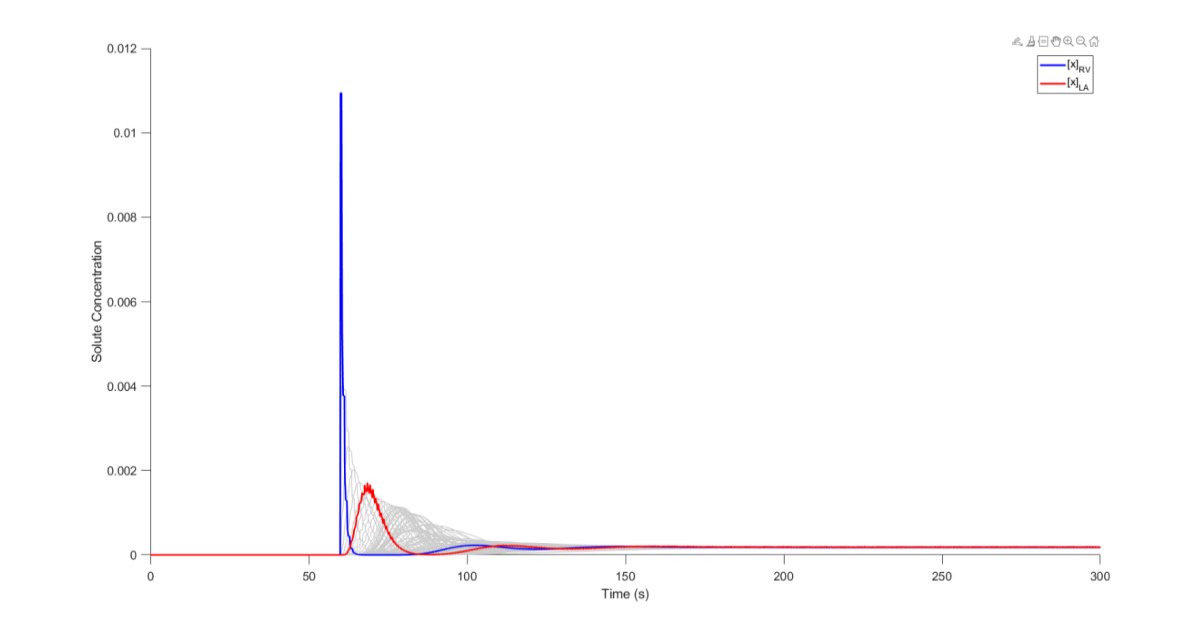
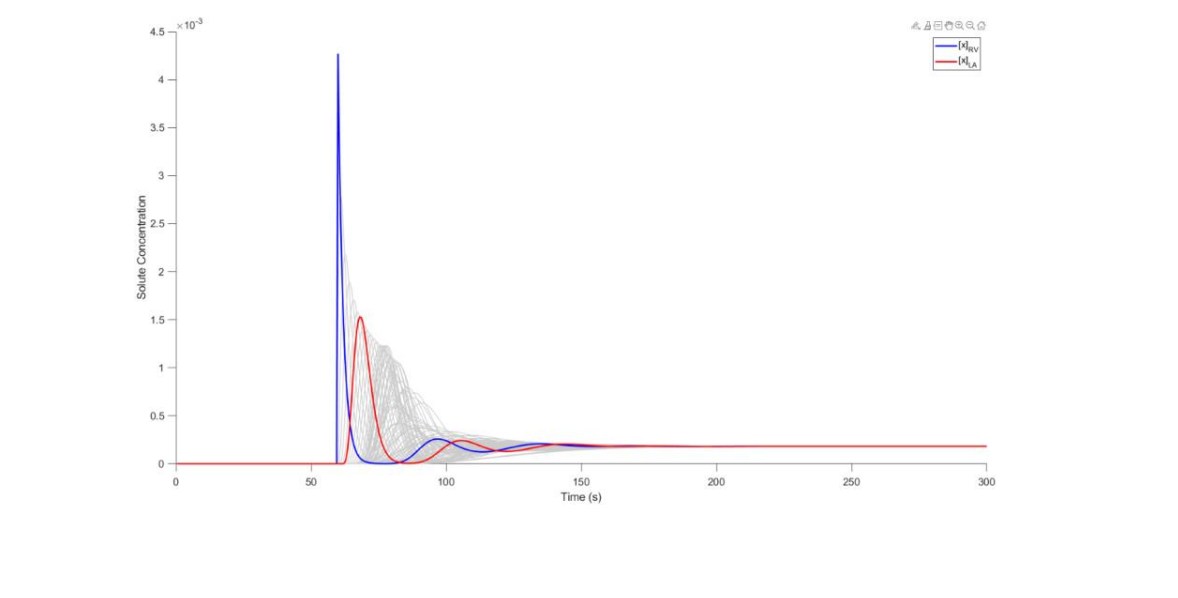
The first question the model answers is whether pulsatility matters. One unit of solute is injected and tracked as it circulates, run twice: once with the heart actually beating, and once replaced by steady flow.
| Measure | Beating heart | Constant flow |
|---|---|---|
| Compute time | 18.9 s | 1 s |
| Final solute concentration | 0.0001879 | 0.00018134 |
| Lung mean transit time | 8.52 s | 8.5 s |
| First recirculation peak, right ventricle | 41.62 s | 37 s |
The useful result is the trade. Pulsatility costs roughly nineteen times the compute and buys almost nothing on the slow measures: mean transit time through the lungs differs by two hundredths of a second, and both conditions converge on the same well-mixed final concentration, which checks out against one unit distributed across total blood volume. Where it does matter is recirculation timing, which arrives about five seconds later with a beating heart, and peak amplitude, which is far higher. So if the question is steady-state distribution, constant flow is the right model; if it is peak exposure or arrival timing, it is not.
Watching the animation, the fast compartments are the ones you would expect from perfusion per unit mass — heart, brain, kidneys, thyroid, adrenals. Bone, fat, and the catch-all are slowest in both conditions.