assistive device · BME:3710

A modular attachment system for thumb UCL splints

Immobilizing a thumb heals the ligament but costs the patient their grip, so they stop wearing the splint. This device bolts a dovetail rail to the splint and swaps in three attachments that hand back the tasks the thumb used to do.

The problem

The ulnar collateral ligament stabilizes the thumb metacarpophalangeal joint during lateral pinch, the grip you use to hold a key or a fork. It tears when the thumb is forced into abduction and hyperextension, which is why the two classic presentations are skier’s thumb, from a ski pole, and gamekeeper’s thumb, from repeated twisting loads. Roughly one in four high school athletes will injure a UCL before graduating, and a national claims database recorded close to 20,000 injuries between 2010 and 2019.

The non-surgical treatment is a splint that immobilizes the thumb until the ligament heals, and it is the preferred route because it avoids an operation. The catch is that the splint does exactly what it is supposed to. With the thumb locked out, eating, brushing teeth, pinching, and dressing all become difficult, so patients take the splint off. Compliance drops, and the injury drags on longer than it should.

That gap became the team’s need statement: a way to increase splint compliance in UCL patients by developing a modular assistive device for activities of daily living.
Specifications

Requirements came out of a patient interview that identified the tasks causing the most trouble: feeding, brushing teeth, pinching, and bathroom use. Rather than design one tool that compromised across all four, the team built a mounting system and let the attachments specialize.

RequirementSpecification
Mounting interfaceLaser-cut acrylic dovetail rail, 2 in × 3/4 in, bonded to the splint with plastic weld putty
Rail symmetryGenderless profile — every rail is identical, so any attachment fits any mount
Attachment swapSlide-on, removable by hand, no tools
Load limit2 lb per attachment
WeightUnder 1 lb each
PortabilityFits a pants pocket or small bag
CleaningSoap and water
Build cost$33.10 in materials for the full three-attachment set

Three patents anchored the prior-art search: a powered straightening device (JP5557529B2), a low-profile dynamic extension splint (US 2009/0062708 A1), and a hand orthosis (US7837641B2). The orthosis came closest to the platform concept, but it leaves the thumb free to participate in the grip, which is precisely what a healing UCL cannot do. Keeping the thumb fully out of the load path is the distinction this design is built around.

The three attachments

The rail bonds permanently to the thermoplastic splint; the attachments come and go. Each one replaces a different function the thumb used to provide.

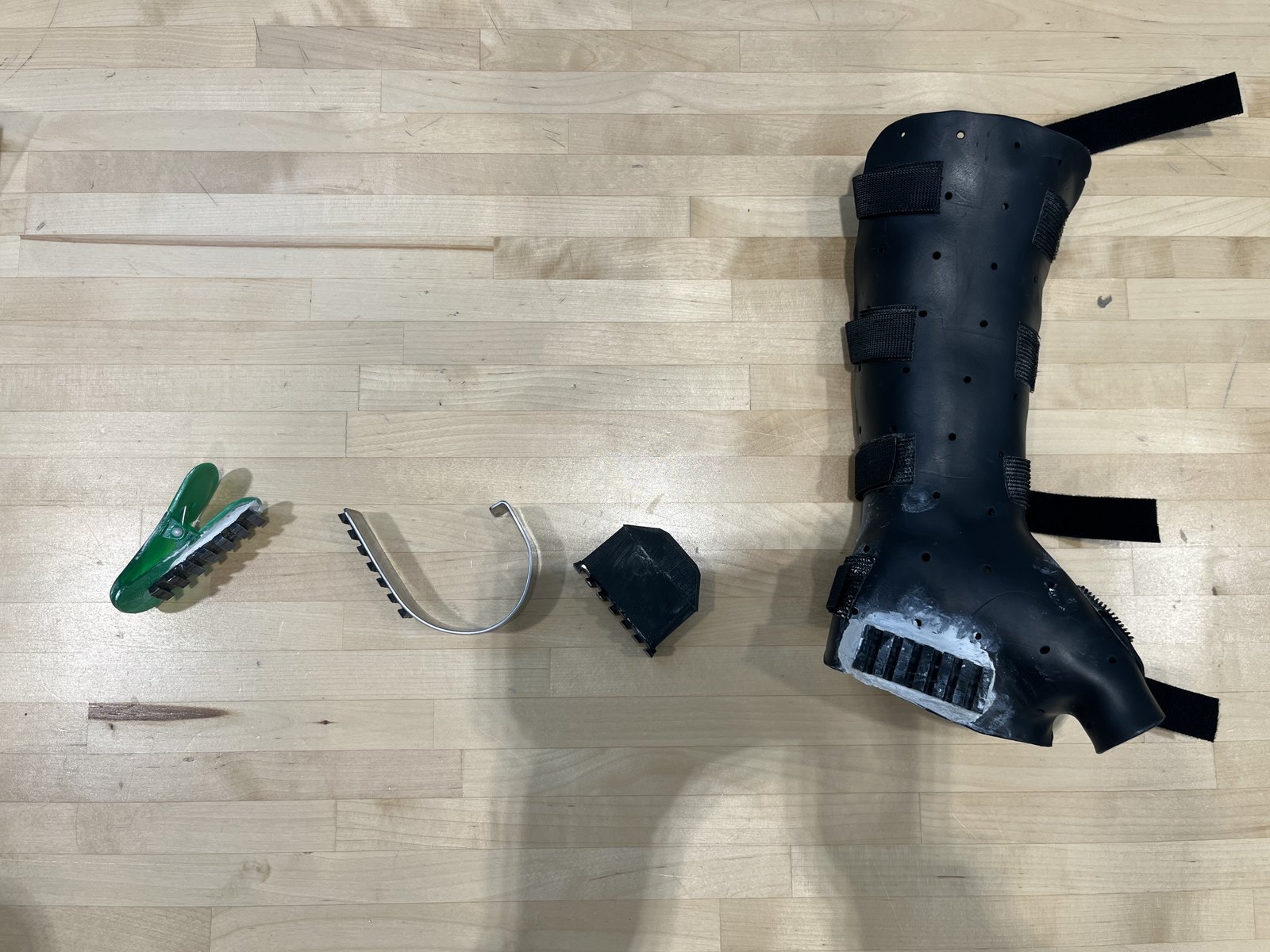
The full kit laid out: splint, platform, J-hook, and utensil holder
The complete system. One bonded rail on the splint, three interchangeable attachments.
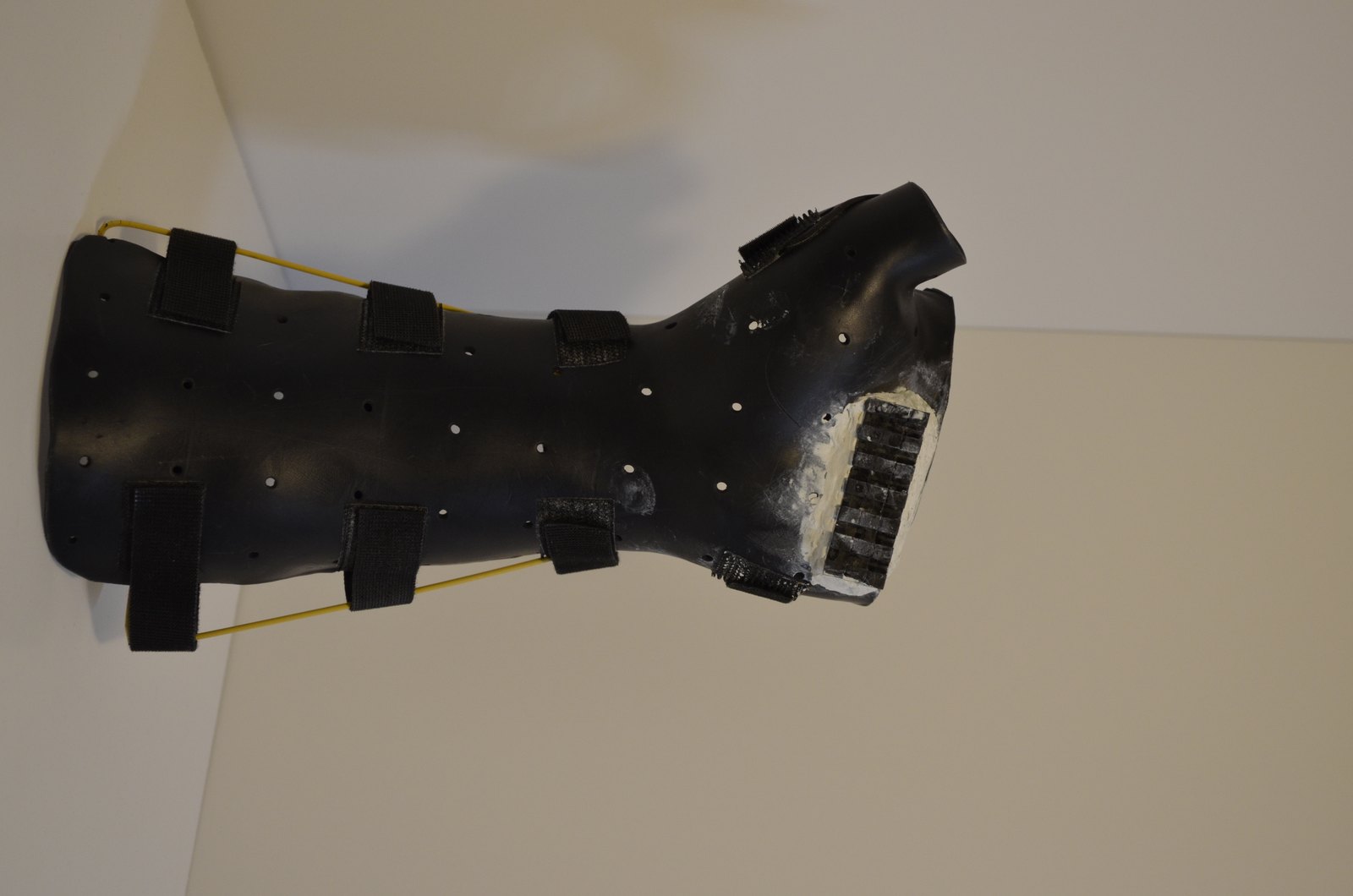
Thermoplastic splint with the dovetail rail bonded to the palm side
The dovetail rail, bonded to the palm side of the splint with plastic weld putty.

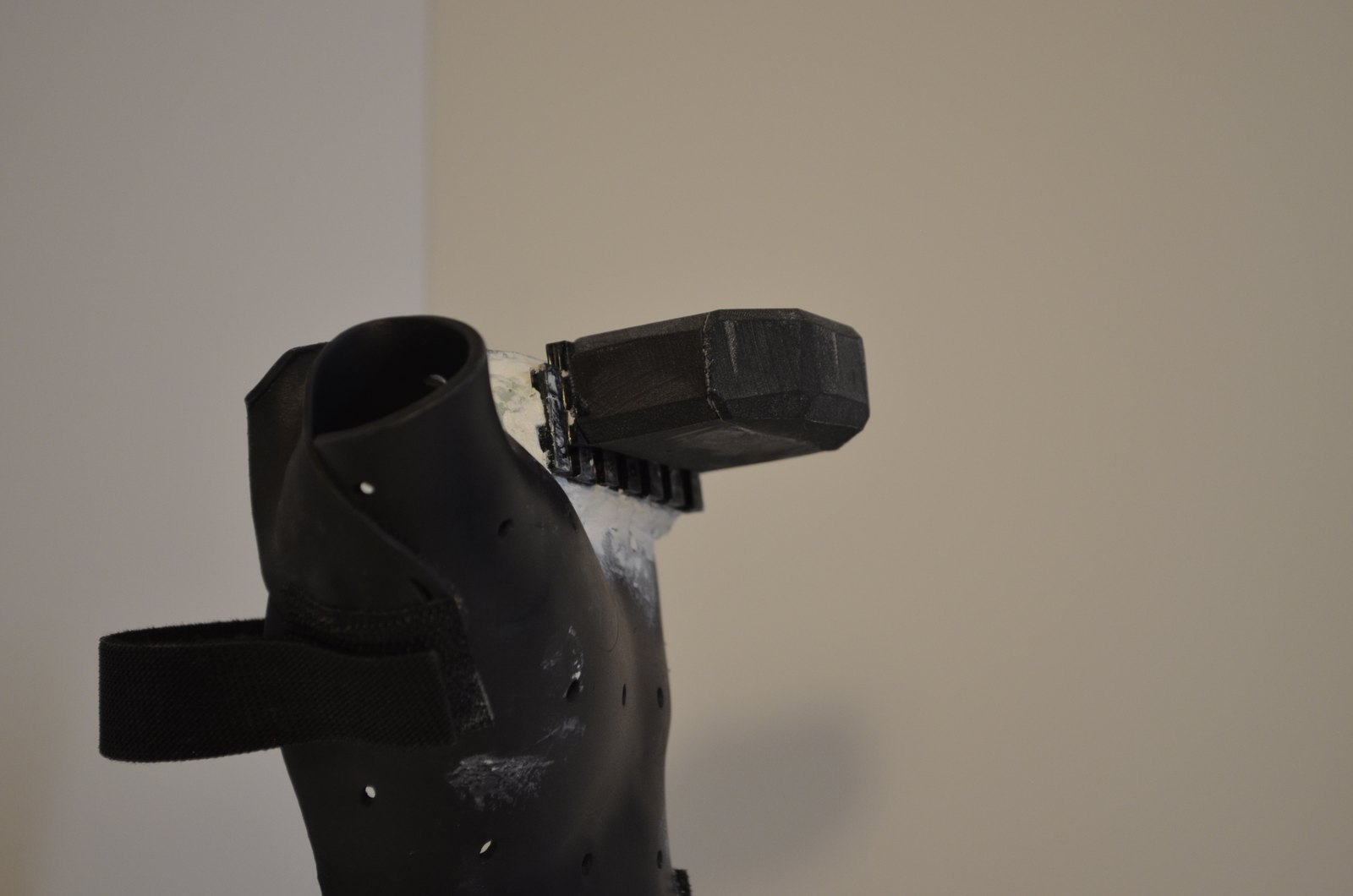
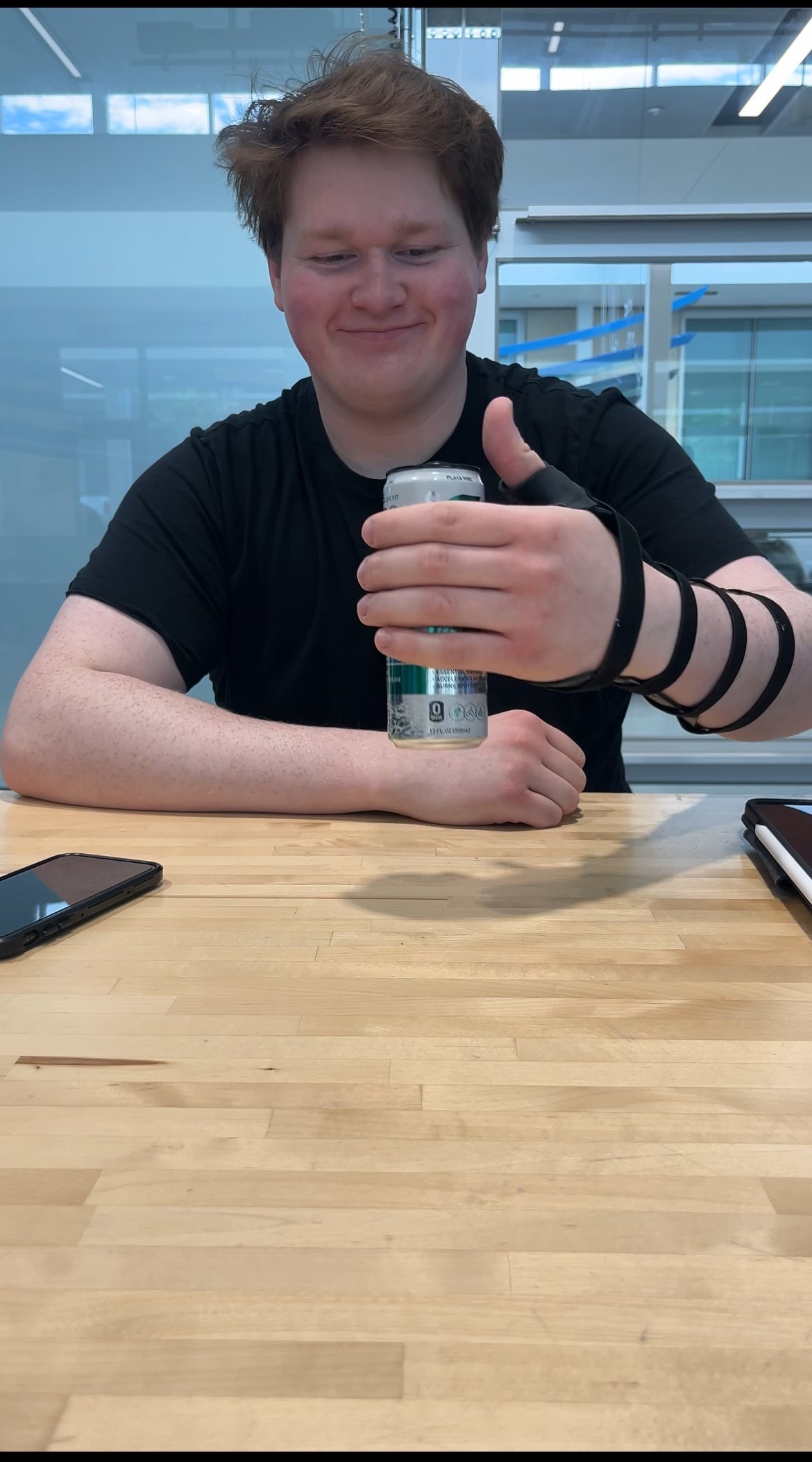
Platform. An 80A rubber block that gives the forefingers something to press against, standing in for the opposing thumb. Soft enough to grip, firm enough not to deform under load. It handles the broadest range of tasks: pinning a toothbrush against the pad and wrapping the fingers around it, holding a can, working a spray bottle trigger.

Platform attachment mounted on the splint rail
Platform mounted. The rubber face sits where the thumb pad would be.
Holding a drink can against the platform attachment without using the thumb
Holding a can with the thumb fully immobilized, load carried by the forefingers against the platform.

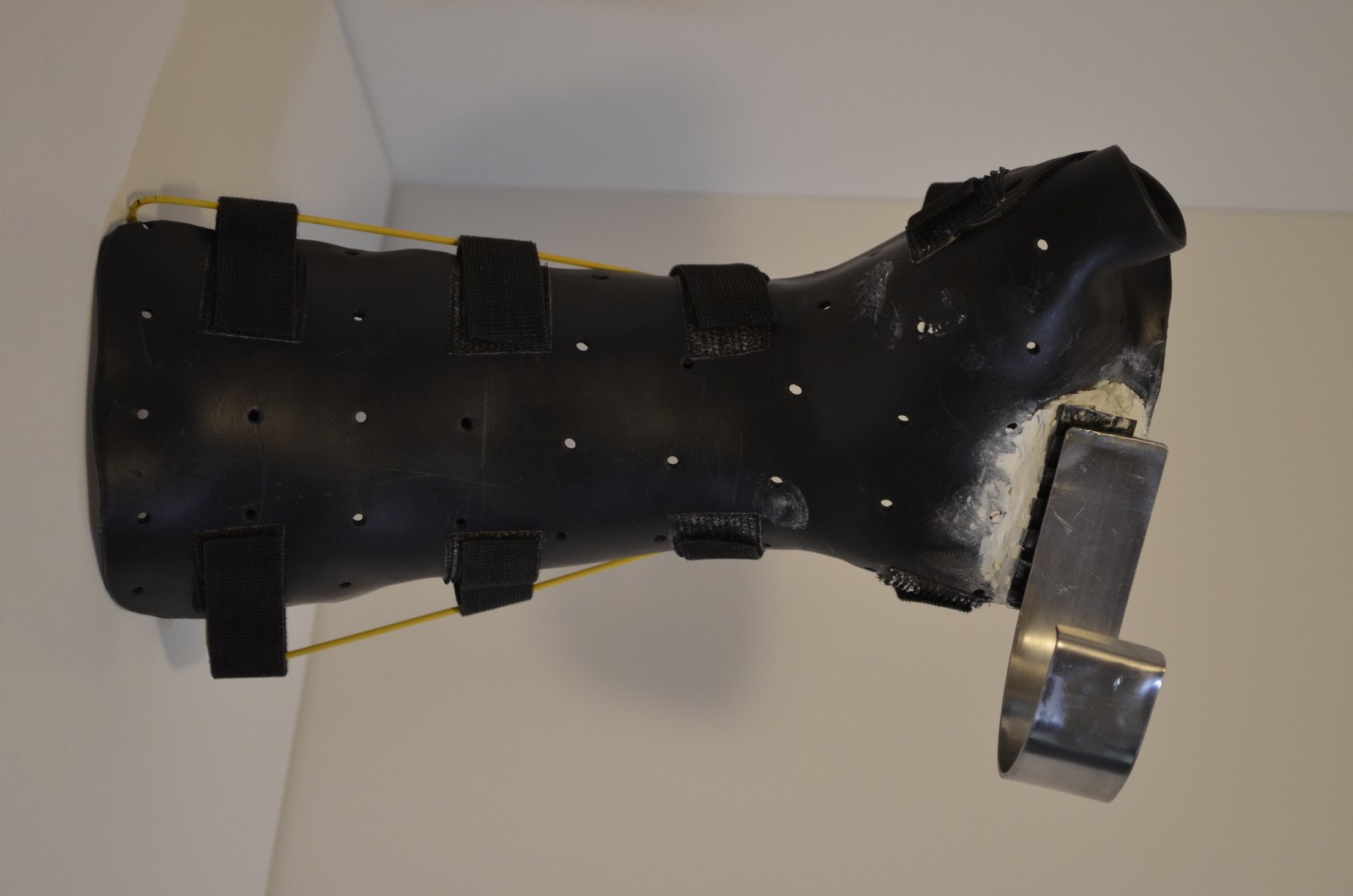
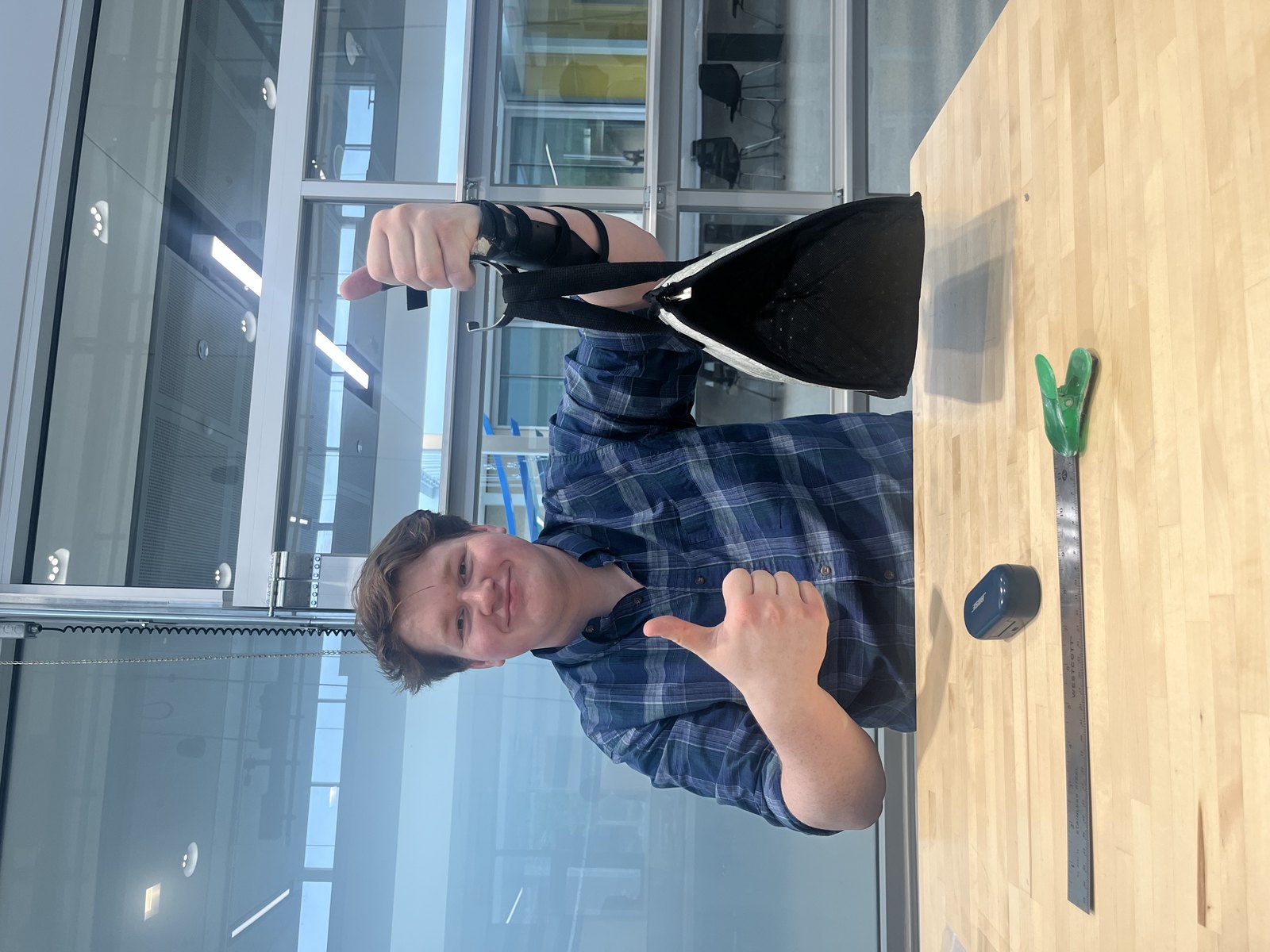
J-hook. Bent from 1/16 in low-carbon steel, for pulling rather than gripping. It threads through a belt loop or catches a waistband, which is what makes independent bathroom use possible, and it carries bags and anything else with a loop. It mounts in either orientation so the user can pull up or down.

Steel J-hook attachment mounted on the splint
The J-hook mounted for a downward pull; reversing it on the rail flips the pull direction.
Using the J-hook attachment to lift an object
Carrying a load on the hook, with no grip and no thumb involvement.

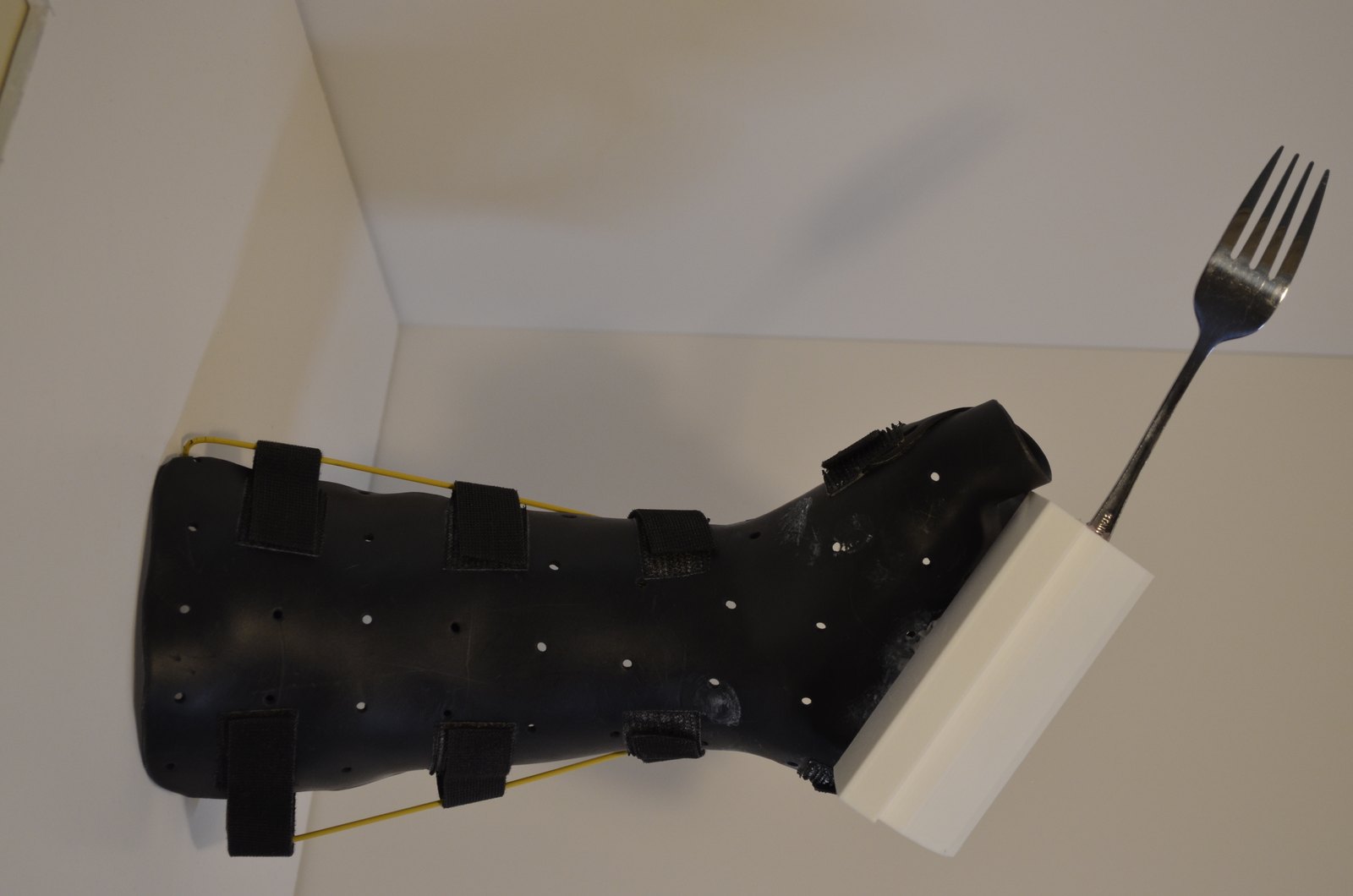
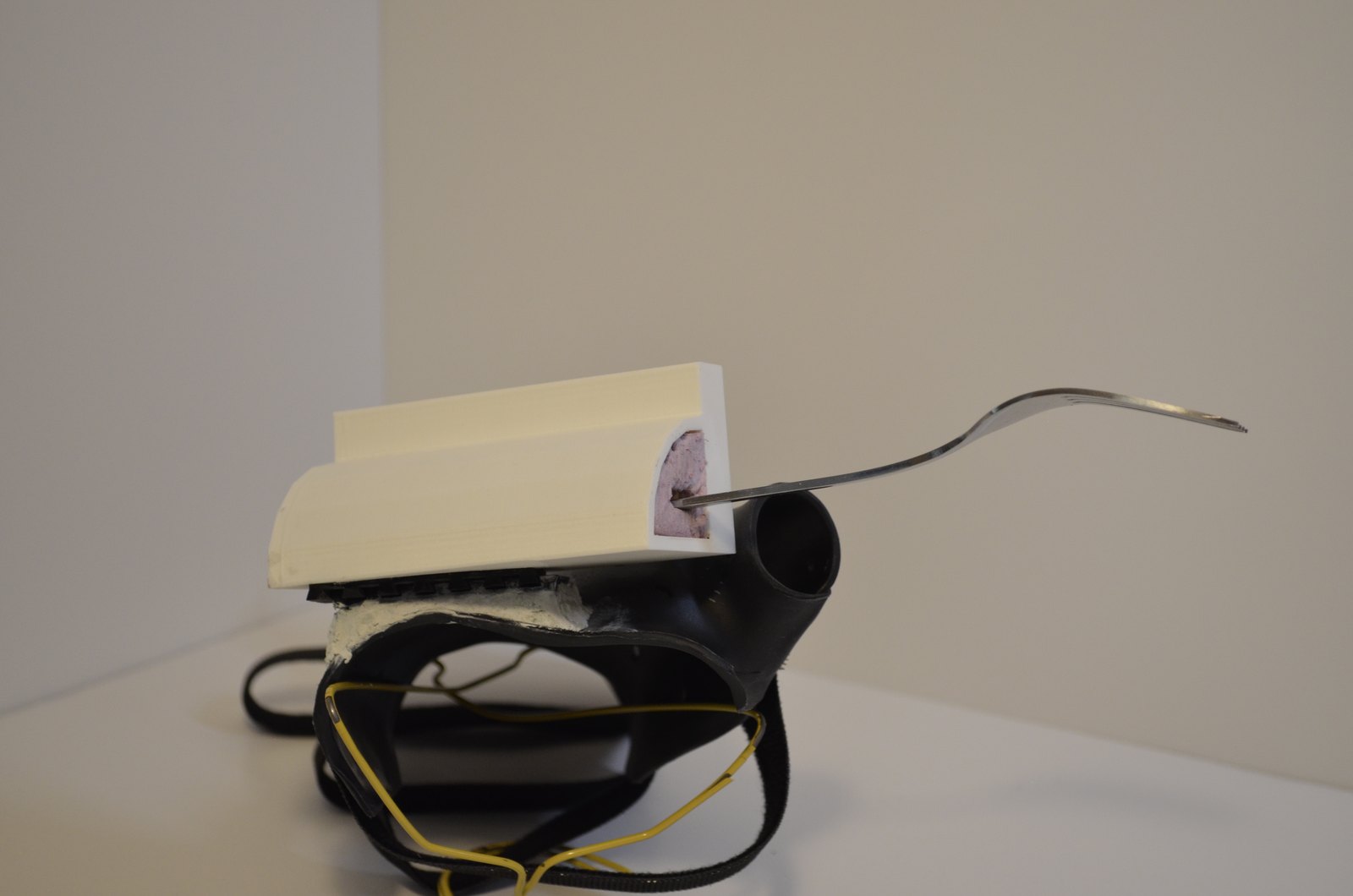
Utensil holder. An FDM-printed base and hollow quarter-cylinder packed with foam. Push a fork, knife, or spoon into the foam and it holds; pull it out and swap it. The utensil sits below the thumb line so the remaining MP joints do the gripping while the thumb stays locked.

Utensil holder attachment on the splint with a fork inserted
The utensil holder with a standard fork pushed into the foam core.
Detail of the 3D-printed utensil holder and its dovetail rail
Printed base and quarter-cylinder, with the dovetail rail bonded underneath.

Load analysis

Every attachment hangs off the same small bonded joint, so the rail interface is the part that decides whether the system holds. Each attachment got a free-body model at its rated 2 lb load to size the reaction forces and moment the joint has to survive.

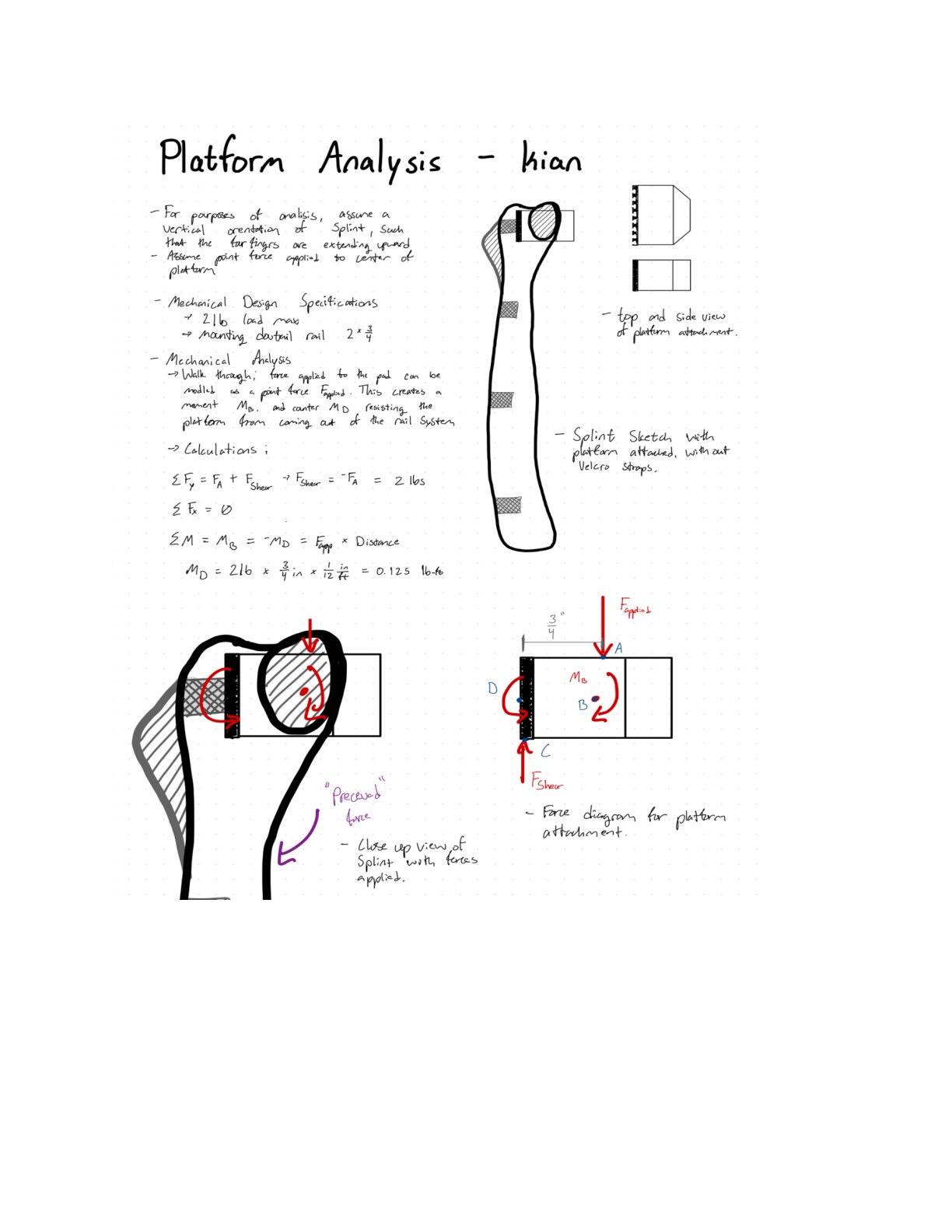
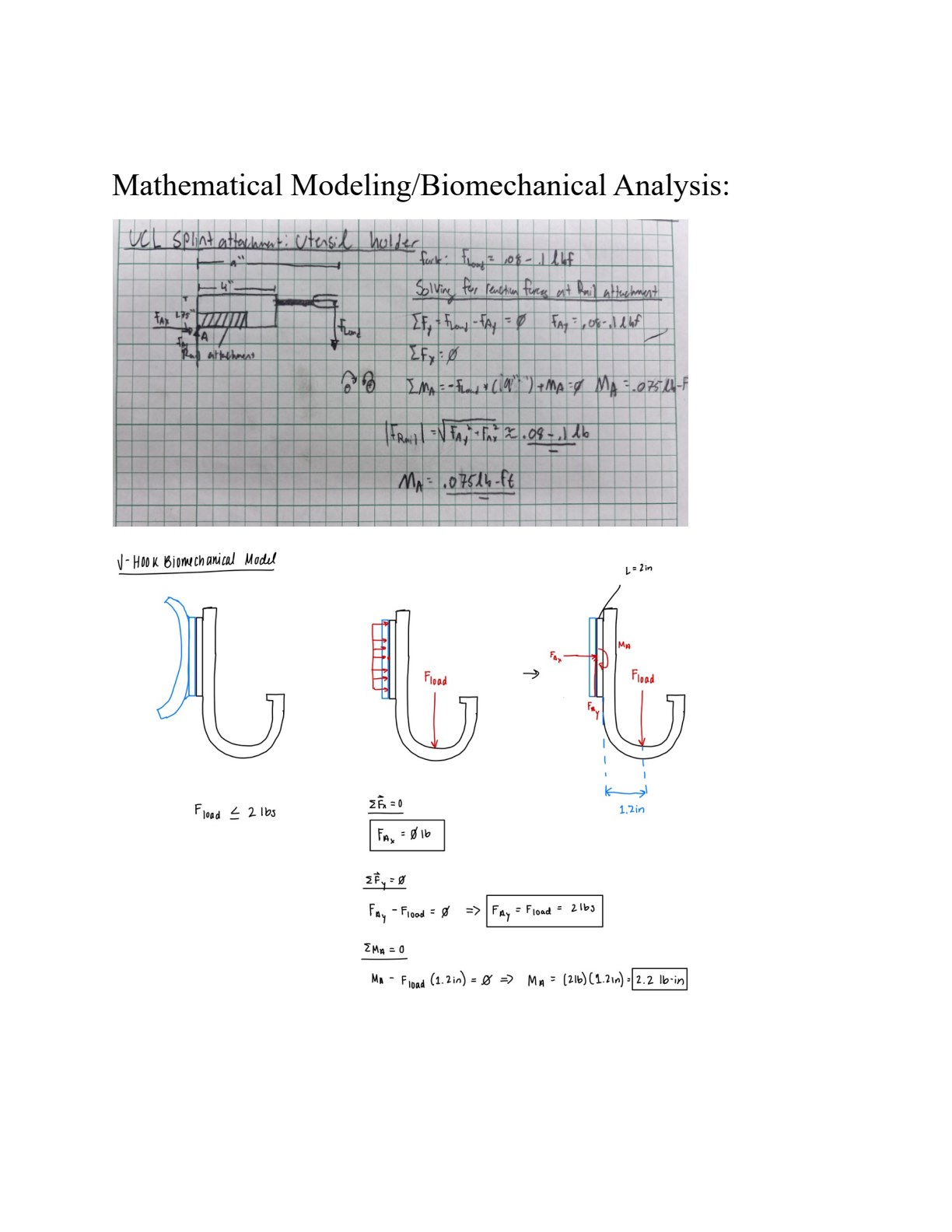
Kian ran the platform analysis. Treating the finger pressure as a point load at the pad center, the joint sees 2 lb of shear and a resisting moment of 0.125 lb·ft over the 3/4 in offset, the couple that would otherwise peel the attachment out of the rail. The J-hook is the harder case: the same 2 lb acting 1.2 in out from the mount produces 2.2 lb·in at the joint. The utensil holder, loaded by the weight of a fork rather than a pulled object, barely registers by comparison at roughly 0.1 lb.

Hand-drawn free-body diagram and calculations for the platform attachment
Platform free-body analysis: shear at the rail and the resisting moment across the 3/4 in offset.
Hand-drawn free-body diagrams for the utensil holder and J-hook attachments
Utensil holder and J-hook models. The hook governs, at 2.2 lb\u00b7in on the joint.

Classification

The device classifies as Class I under both FDA and EU MDR. Working through Annex VIII of the MDR, implementing rule 1 puts all non-invasive devices in Class I unless a later rule pulls them out, and none apply here: the device does not alter biological or chemical composition, does not contact injured skin or mucous membrane, is non-invasive, non-active, and is not software. The FDA classification follows the same reasoning and the precedent of comparable marketed orthoses.

The report also carries a full standard operating procedure, covering surface preparation and the 24-hour cure before first use, plus per-attachment instructions and a split of responsibility between manufacturer and end user.

What would change next

The rails are the weak point. Each one is currently three laser-cut acrylic pieces glued into a dovetail, and squeeze-out from the adhesive binds the track so attachments do not slide cleanly. Machining them as single metal pieces would fix the tolerance problem outright. Beyond that, fastening the rail into the attachment rather than relying on adhesive, and adding a positive lock so an attachment cannot slide off under load.

The market is also wider than the need statement assumed. The rail bonds to any rigid splint or cast, so wrist fractures, ligament tears, dislocations, severe sprains, and ganglion cysts all fit the same system, as do longer-term conditions like arthritis, carpal tunnel, and tendonitis where grip strength is the limiting factor rather than immobilization.

Keywords

assistive technology orthotics CAD biomechanical analysis prototyping regulatory classification

Full project report

Background, prior art, biomechanical analysis, bill of materials, classification, and the complete standard operating procedure.

Download PDF

Working drawings

Dimensioned Creo drawings for the utensil holder, J-hook, platform, and rail.

Download PDF